

The Art of Light and Surface: Davide Groppi and Ariostea
When specifying materials for a high-end architectural project, it's easy to focus on the physical alone: the texture of a surface, the veining of a stone, the finish of a slab. What's harder to specify, and equally important, is what happens to those materials under light. The collaboration between Italian lighting master Davide Groppi and Ariostea makes this point with rare clarity.
Ariostea's flagship showroom wasn't conceived as a conventional tile display. It was designed as a stage. Groppi's brief was to create a lighting scenography that would reveal the full depth and visual continuity of Ariostea's large format porcelain surfaces, not simply illuminate them. His approach drew on the classical principle of chiaroscuro, the deliberate interplay of light and shadow. By leaving portions of the space in darkness and directing focused beams onto specific surfaces, the porcelain slabs emerge with three-dimensional presence. Veining appears deeper. Texture becomes tactile from across the room. The material takes on a weight and monumentality that flat, ambient light simply cannot produce.
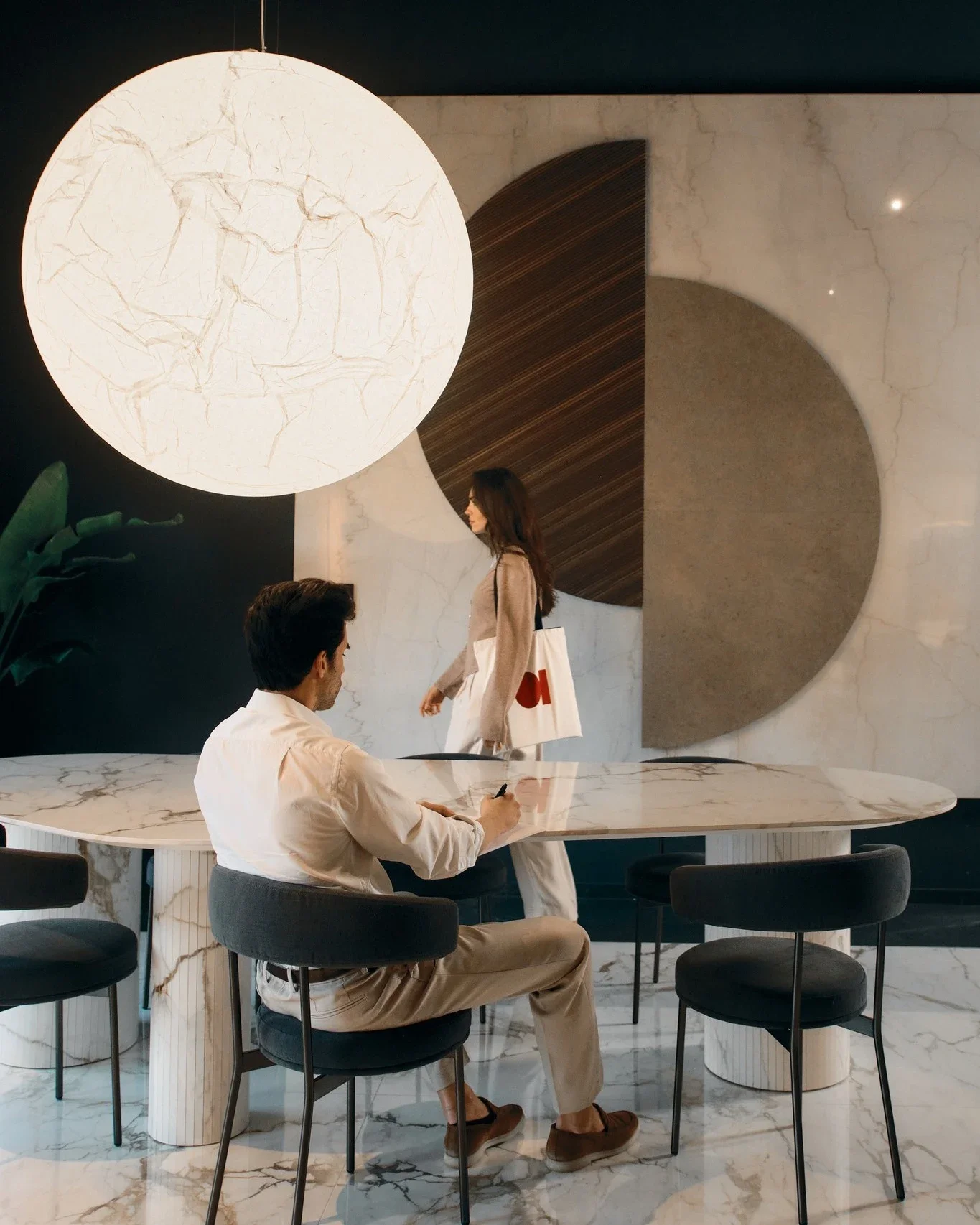
The result is a showroom that functions as a demonstration of a design principle: that surface and light are not separate considerations. They are a single decision made at the point of specification, not two separate briefs handed to two separate consultants after the fact.
The lessons from Groppi's approach are practical rather than theoretical. Directional light reveals micro-texture. High-end porcelain carries intricate surface detail, from matte finishes to structured stone-like reliefs, that uniform ambient light flattens entirely. A focused beam cast at a low angle across the surface of an Ariostea Ultra slab will read entirely differently from overhead recessed lighting. The texture becomes visible. The material earns its specification. Shadow, equally, is a design tool rather than a problem to solve. Allowing sections of a room to rest in darkness gives large format porcelain the visual space to anchor the room. Contrast is what creates presence, and a lobby or feature wall bathed in uniform light loses the drama that made the material worth specifying in the first place.
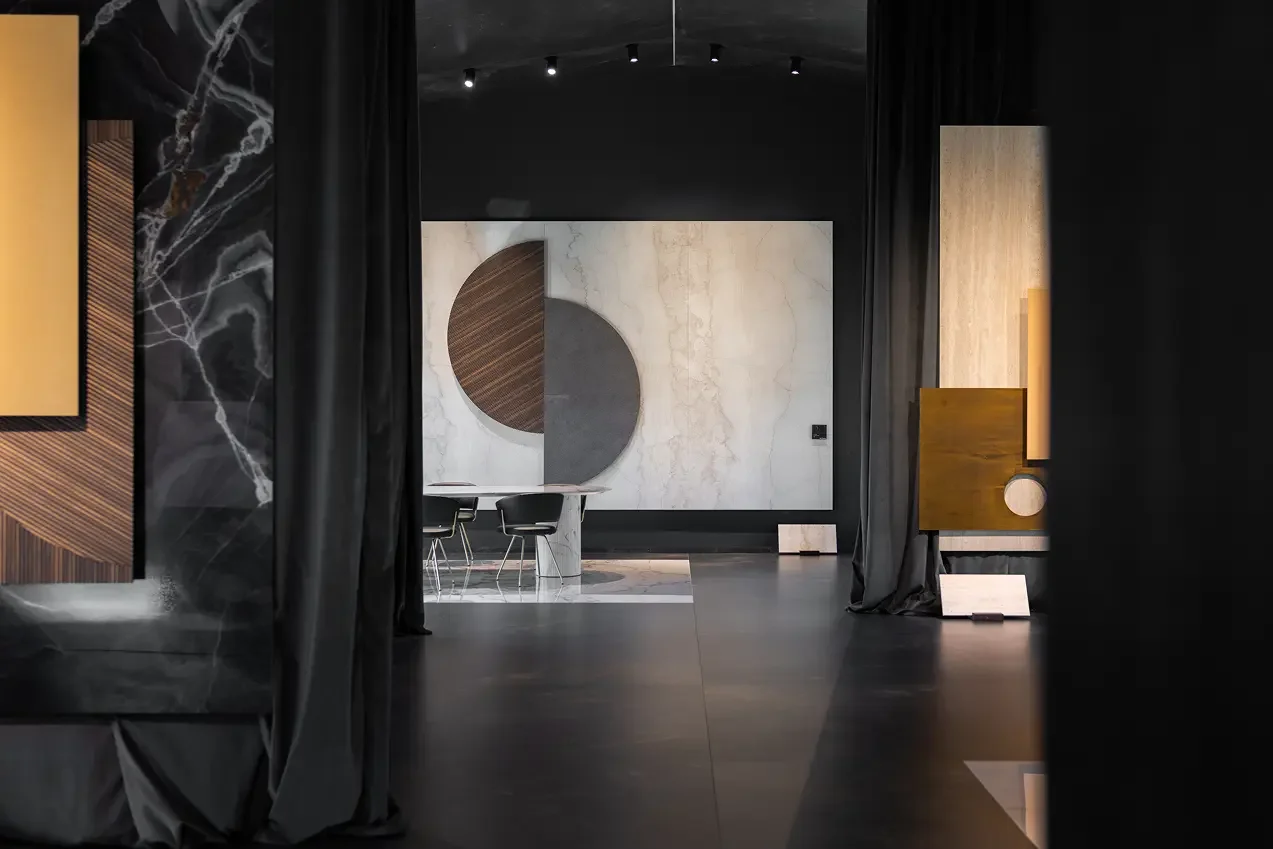
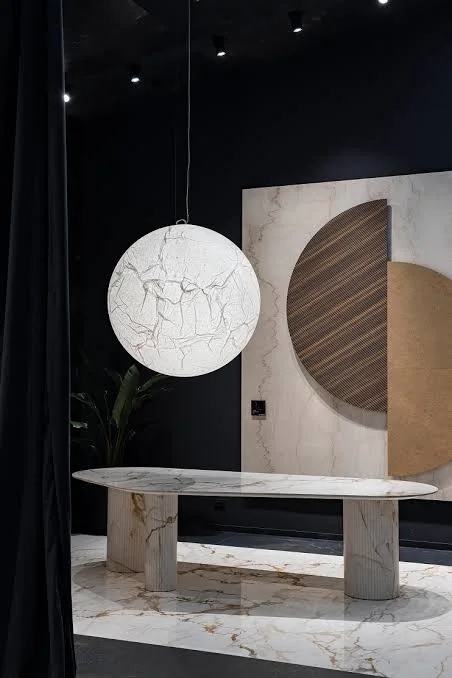
Groppi's broader philosophy has always been that the fixture should be invisible and the light itself should be the experience. In surface-led interiors this principle is particularly relevant. Deeply recessed downlights, seamless linear profiles and concealed sources keep the focus where it belongs: on the material.
Choosing the right large format porcelain surface requires understanding how it responds to light, shadow and scale. That's something you cannot assess from a sample tile or a product page.
Ariostea is available through PietraCasa. Contact us at studio@pietracasa.uk to discuss your project.