

The Quiet Dialogue: Living Ceramics in Milan
When designing a contemporary minimalist interior, it's easy to accidentally cross the line from crisp and calm to cold and sterile. High-end spaces love massive open floors and seamless walls because they emphasise light and geometry, but if the specified surfaces lack a subtle tactile soul, the final room can feel more like a clinical gallery than a luxury residential sanctuary. Mastering that balance between crisp architectural lines and rich material warmth is the Spanish design house Living Ceramics, based in the ceramic heartland of Castellón. Rather than leaning on loud graphics or high-gloss marble copies, they focus on understated, warm minimalism, crafting large format porcelain panels with quiet, sophisticated tonal movement that contributes to the architecture rather than simply covering a floor.
What separates Living Ceramics from standard manufacturing houses is its sustained collaboration with genuine design talent. The Bisel Collection, designed by Víctor Carrasco, went on to win the iF Design Award in 2022, a masterclass in three-dimensional spatial play using subtle geometric reliefs that interact with shifting shadow rather than relying on flat graphics. The Cava Collection, developed by Milan-based studio LucidiPevere, takes the opposite approach to the grout line: instead of hiding it, the studio etched clean, mathematical grooves directly into the matte porcelain face, letting contrasting coloured joints become part of the design rather than something to disguise.
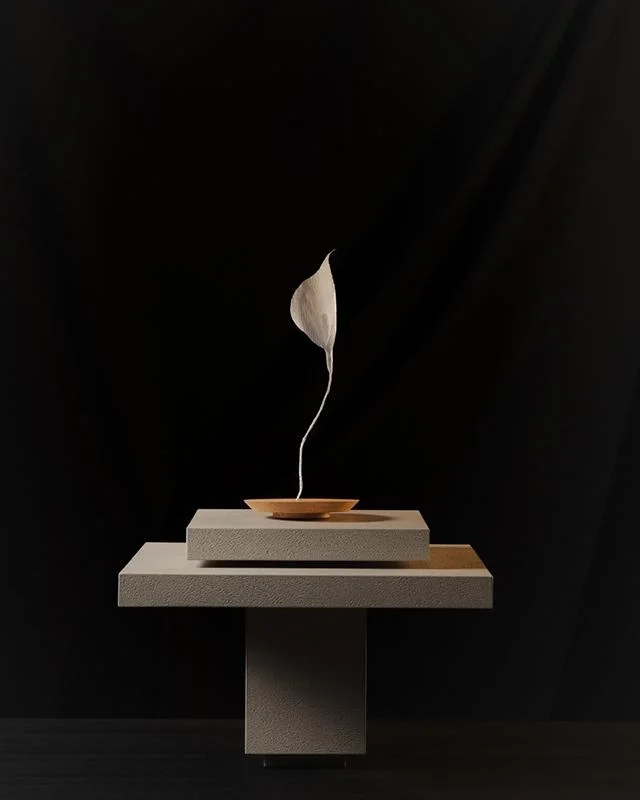
Living Ceramics designs collections with exceptional tonal sensitivity, replacing cold minimalism with warm architectural elements..
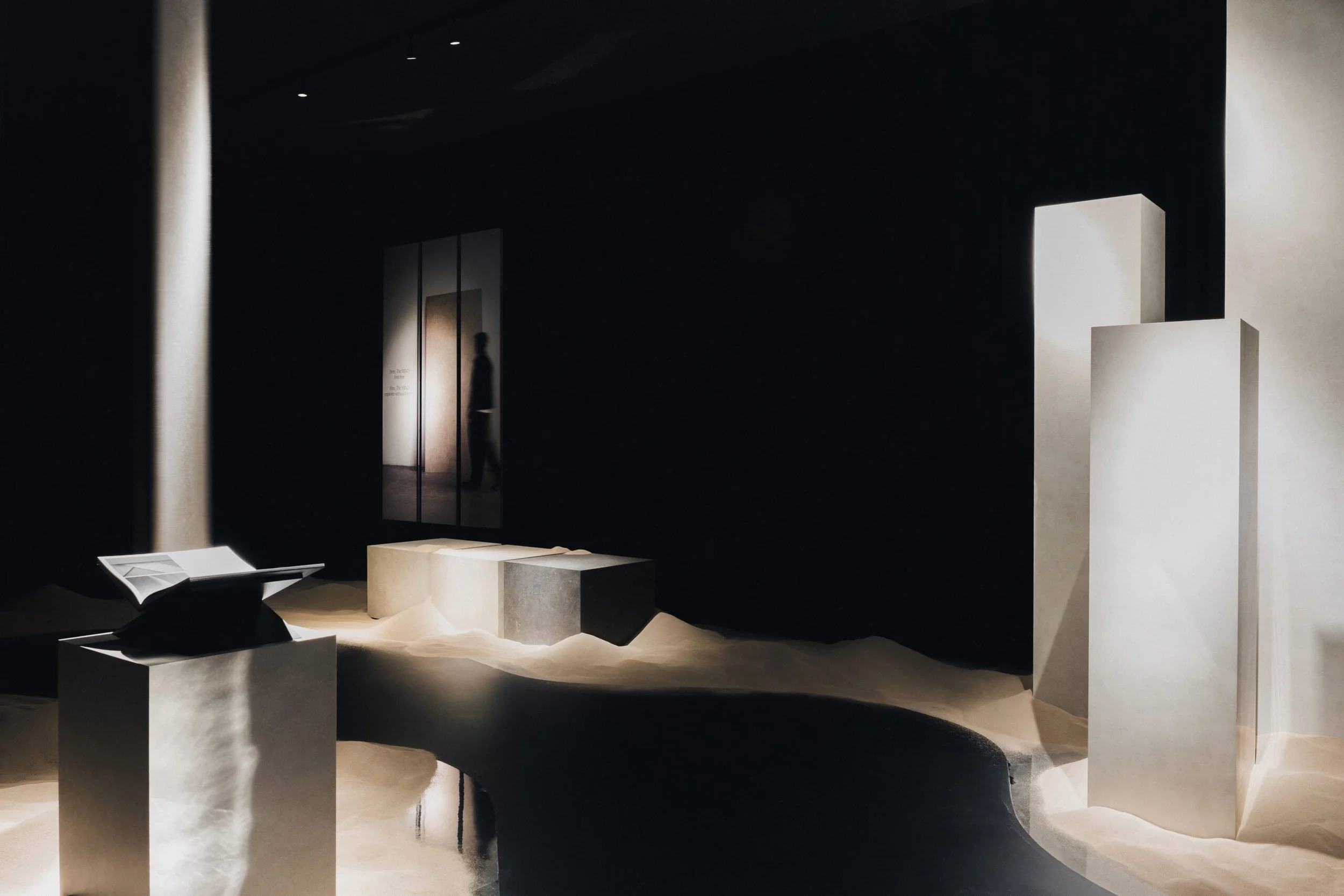
Through the 'Ch. 02 The Mind' exhibition in Milan, Living Ceramics highlights the close connection between architectural volume and tactile emotion.. Source: Living Ceramics
That same spatial philosophy reached its fullest expression at Milan Design Week, where Living Ceramics and its associated technical stone brand, Lithotech, unveiled "Ch. 02 The Mind" inside the historic Palazzo Bocconi. Rather than a standard trade booth, the space was built as a sensory pause from the city's rhythm, dim lighting, sand, and ceramic sculptures forming an immersive environment rather than a showroom. It served as the global launch stage for two new collections: Oda, inspired by the fossil-rich stones of the French west coast, and Gubi, expressed through massive, silent monolithic volumes that turned the exhibition space itself into something closer to an emotional experience than a product display.
Specifying a highly refined, multi-format product like Living Ceramics leaves almost no margin for error during installation. Because collections like Bisel, Oda and Gubi rely on ultra-crisp lines to achieve their architectural look, the technical execution has to match the design intent exactly. At PietraCasa, we act as the engineering bridge between that Spanish material innovation and your finished build here in Dorset, using advanced digital laser templating to map sub-floors to a fraction of a millimetre, heavy-duty levelling systems to eliminate microscopic height variance between panels, and custom-formulated resins to bond seams cleanly.
Ready to explore the tactile depth of Living Ceramics and Lithotech? Visit our Poole design studio to experience their collection, or contact our team to coordinate specifications for your upcoming project.